
Every complaint filed with the U.S. safety regulator, NHTSA, against RV manufacturers since 2015. Here is what owners reported, and which of those problems our system is built to prevent or catch early.
complaints involve the electrical system, slide-outs, awnings or leveling — the systems AiBatteryPro monitors and controls.
complaints describe a battery, charging or wiring problem that came with fire or smoke.
mention the RV was parked, stored or unattended when it happened. Nobody was there to notice — unless the RV can tell someone.
Method: we searched the narrative of every complaint in NHTSA's public complaint database (flat file FLAT_CMPL) filed against RV manufacturers between January 2015 and October 2026, and grouped them by keywords. Each complaint is counted once, even when it was filed against several components. One complaint can fall into several groups, so the shares add up to more than 100%. NHTSA collects safety-related complaints, so non-safety problems — water leaks above all — are heavily under-reported here; manufacturers tell us leaks are their most common aftersales call.
Quotes are taken from the complaints themselves.
Every circuit is metered for current and temperature. A short trips a hardware cut-off in microseconds — it does not wait for software — and the circuit is designed to stay off until someone resets it. Abnormal draw on a circuit is flagged, so a developing fault can be caught early.
Watches battery voltage, charge and draw — and the battery management system, where one is connected — alerts when charging stops or the battery drains with everything switched off, and sheds non-essential loads before the battery goes flat.
Motors run through dedicated modules with current limits, stall detection and a maximum run time. Motion commands expire on their own, and a slide is never moved while the RV's motion sensor says it is travelling.
The same protected motor control: an awning only moves on a deliberate command that expires on its own. The gateway's built-in motion sensor knows when the RV starts to move — if the awning, steps or jacks are still extended, the owner is alerted immediately.
We can't fix a seal, but we can catch the leak. Water and moisture sensors near bathrooms, windows and roof seams connect to the system over Zigbee and flag water the day it appears instead of weeks later — and show which models and locations leak most.
The platform is built for all-electric RVs: induction cooking, heat pumps and compressor fridges on a large battery, so there is no propane on board at all. For RVs that keep propane, certified propane and CO detectors connect over Zigbee and send their alarms straight to the touchscreen and the owner's phone.
The fridge circuit is watched like every other: an alert if it trips, stops drawing power or draws far more than normal — while the food is still cold, and while someone can still act.
Built-in LTE means the RV reports even in storage, with no campground Wi-Fi. Faults, power cuts and unexpected movement go to the owner's phone the moment they happen.
Any brake, tire or wheel-end component that has a sensor can connect to the system — tire-pressure and temperature sensors, hub temperature probes, electric brake controllers with diagnostic outputs — over Zigbee, Bluetooth or CAN. A slow leak, an overheating hub or a brake fault shows up on the touchscreen and the owner's phone — before a blowout, not after.
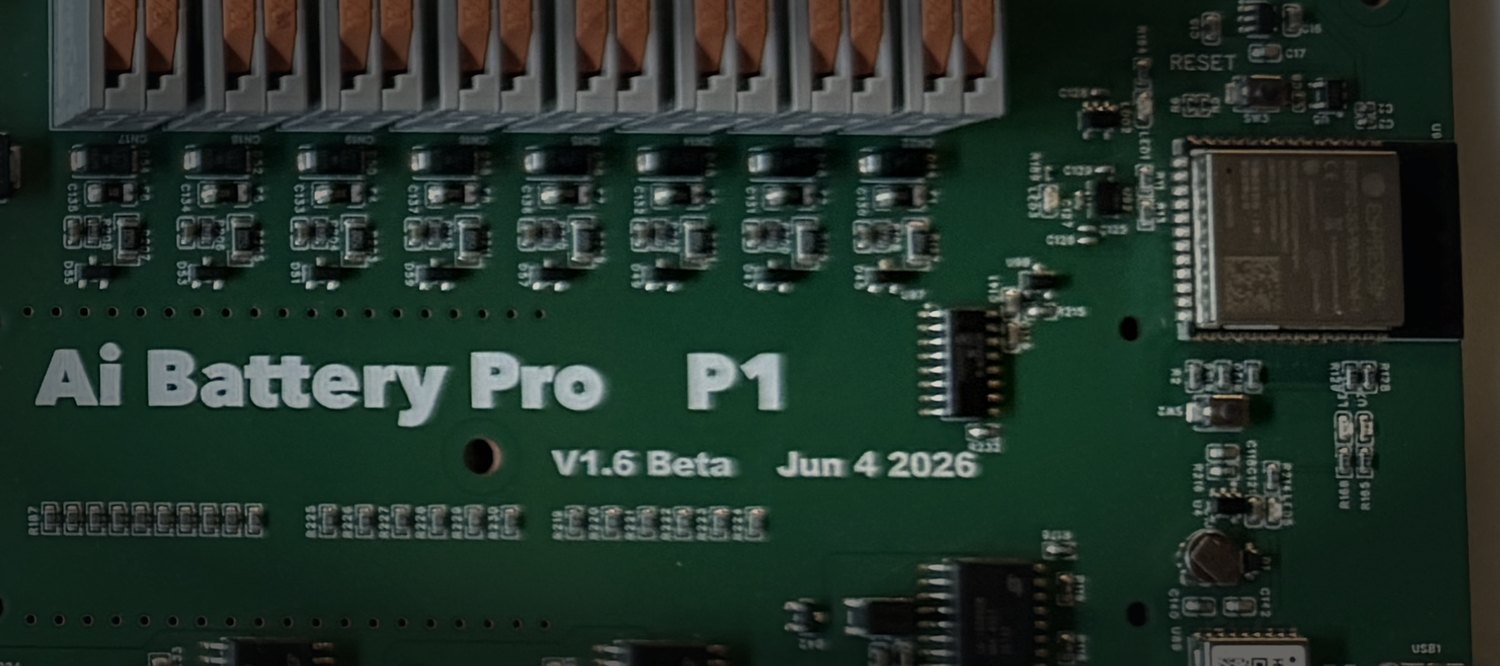
Four parts on one sealed CAN trunk. Every board reports what it is, what it can do and how healthy it is, so the system knows itself and can tell you.


Connects the RV to the owner and runs the diagnostics.
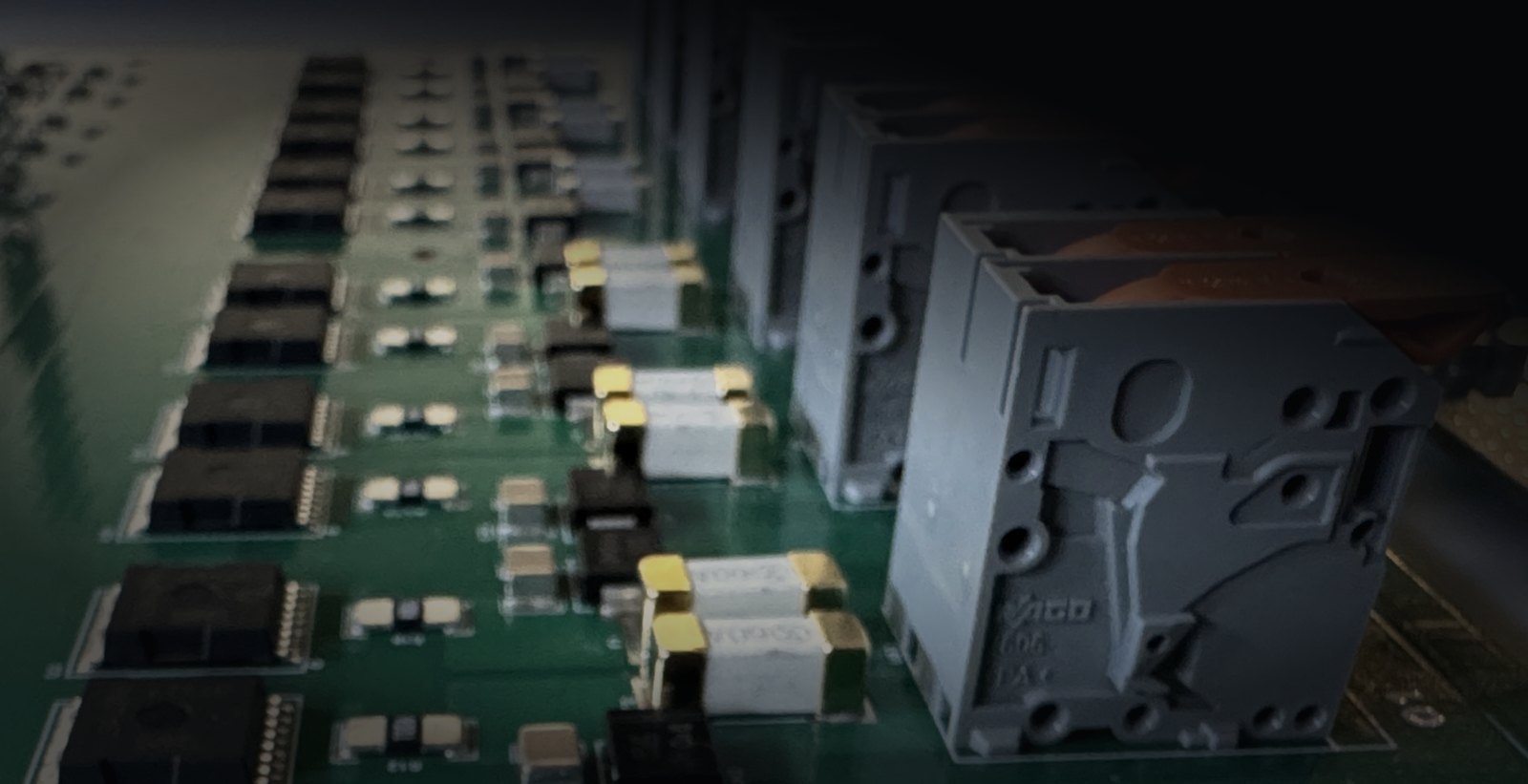
Replaces fuses and relays with metered solid-state switching.
A 4-inch panel inside the RV. Full control, no phone needed.
Motors and accessories plug into the same bus.
More RV owners now camp without shore power for days at a time, on solar and large lithium batteries. That only works if you always know how much energy and water you have left, and if nothing quietly drains it. AiBatteryPro was designed for that life from the start.


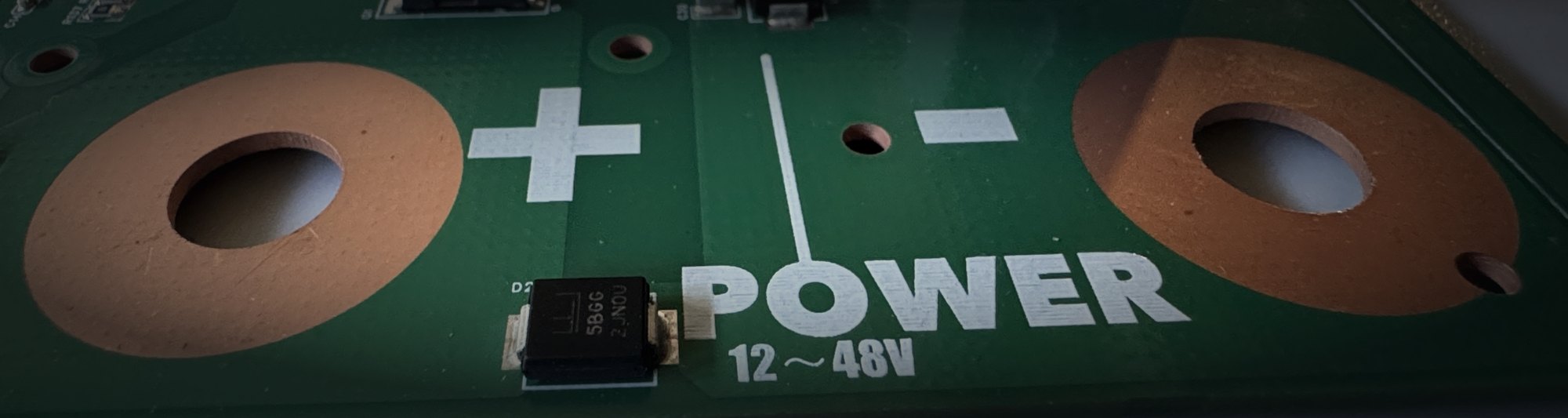
Large off-grid systems run at 48 V to keep cables thin and inverters efficient. Our distribution board switches 12, 24 or 48 V directly, so heavy loads don't need a converter in between.
Battery percentage, charge and draw, and how many hours that lasts at the current rate, on the touchscreen and in the app. Tank levels show how many days of water you have left.
Every circuit is metered, so a fan left on or a fault drawing power at night shows up immediately. When the battery runs low, non-essential loads switch off first, in the order you choose.
The touchscreen and Bluetooth keep full control with no internet. When there is a link — LTE, campground Wi-Fi or Starlink — the app reaches the RV from anywhere.
A large battery and solar make propane optional, and taking it out removes gas leaks and carbon monoxide from the list of things that can go wrong.
New features and fixes arrive over the air, signed and verified, wherever the RV is. If an update ever fails its self-test, the system goes back to the previous version by itself.
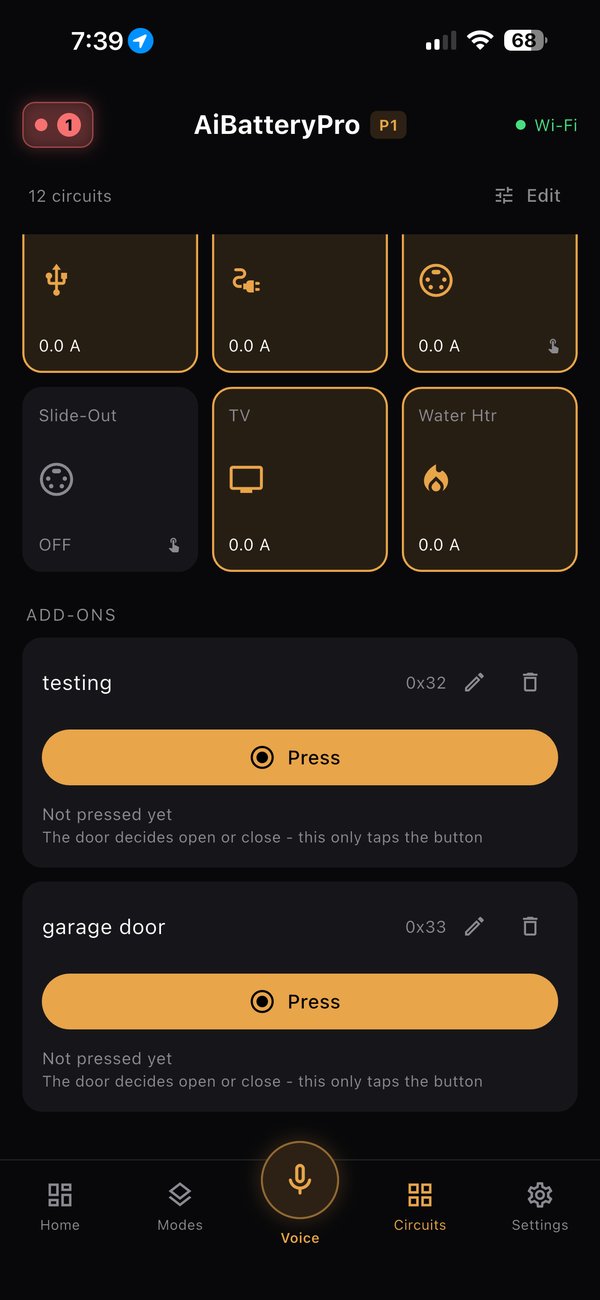
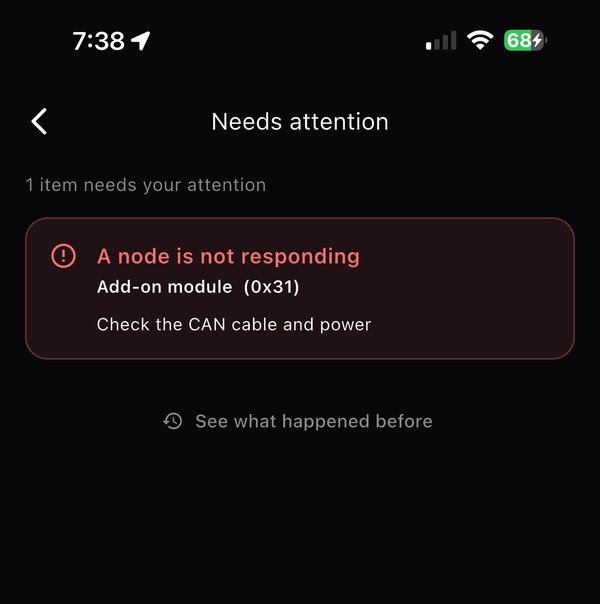
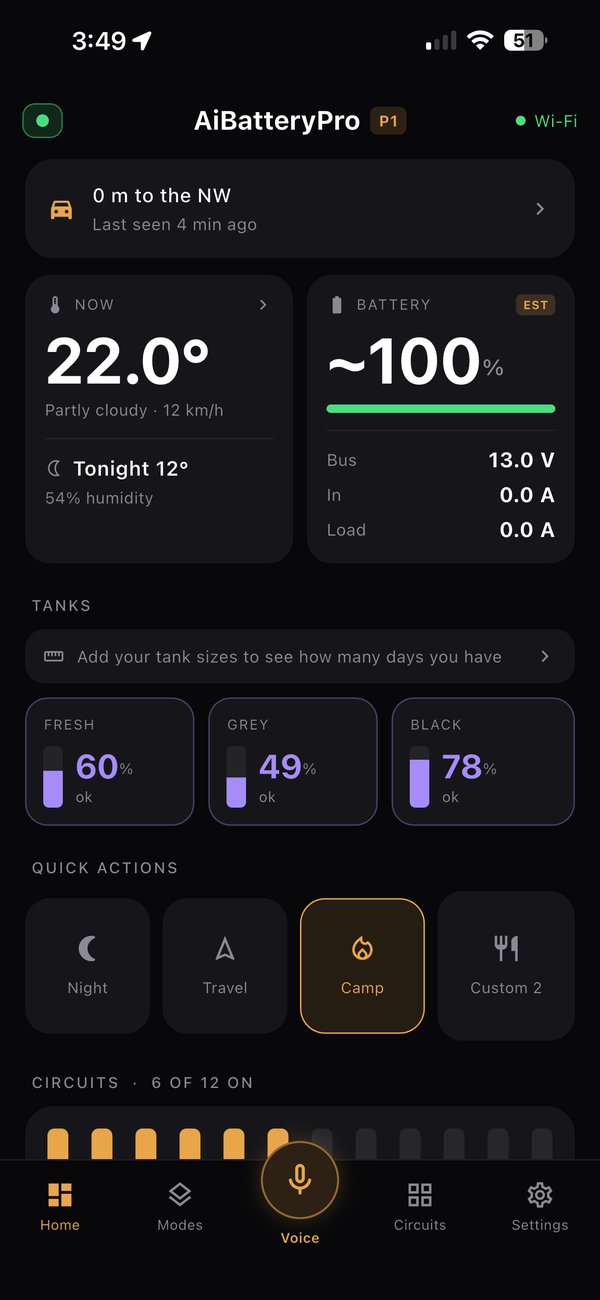
These are screenshots from the app running against our prototype RV system today.

Weather outside and in, battery, tanks and one-tap modes like Night, Travel and Camp.

Live current on each circuit. Add-on modules like the garage door appear on their own when they are plugged in.

When something stops responding, the app says what it is and what to check — not an error code.
The gateway runs its checks on board, so its conclusions are the same in the app, on the touchscreen and in a phone call with service.
Both times within a minute of the compressor starting. More likely the fridge than the wiring.
About 2.8 A with everything switched off. Something is drawing power that isn't on a circuit.
No voltage sag under load on any of the 12 circuits.
Every update is cryptographically signed and checked twice. If a new version fails its self-test, the module goes back to the old one by itself.
Pairing a phone and changing critical settings require someone physically at the RV. Every remote command is signed.
Live location on a map, an arrow that points to it, and an alert if it moves when it shouldn't.
"Is everything OK?" "Turn on night mode." Works with AI assistants, and by voice.
New modules announce themselves on the bus. The app adapts to what is installed, with no reprogramming.
RV-C-aligned CAN and a documented interface, so the RV can talk to the rest of its equipment — and to the tools its owner already uses.
We are looking for a small number of manufacturers to evaluate the system on real production models, and to help shape what it becomes.
One CAN trunk with sealed automotive-grade connectors replaces runs of fuses, relays and switch wiring. Circuit roles are set in software, not in the harness.
With the owner's permission, your service team sees the same diagnostics the owner sees — faults, history and conditions — instead of a description over the phone.
A tripped circuit flagged the day it happens is a quick fix. The same fault found at the next service, after weeks of drained batteries or spoiled food, is a claim.
Water sensors near bathrooms, windows and roof seams flag a leak the day it appears — and, across a fleet, show which models and locations need attention.
The system is real and running end to end today. Here is what is done, what is in progress, and what comes next.
Whether you are a manufacturer, a conversion shop or an owner who wants to try it, we would like to hear from you.